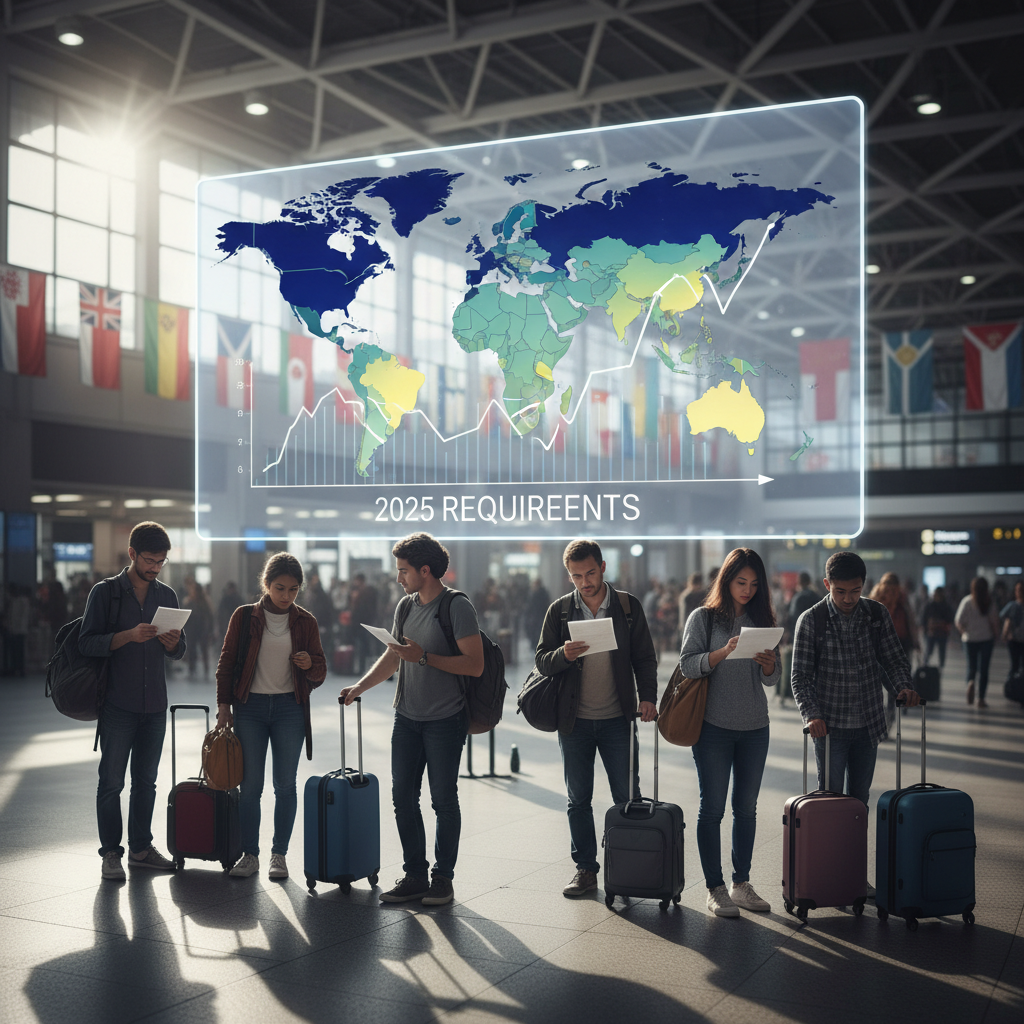
Countries with the Most Changes in 2025 Requirements
The November 2025 passport-photo overhaul is the most significant update to photo standards in two decades. The United States, United Kingdom, and Germany introduced sweeping, strict changes driven by concerns about digital manipulation and AI-edited images. This guide focuses exclusively on photo requirements, validation, preparation, and compliance using only the details provided in the source text.
Summary of what changed in 2025
Major updates now in effect include:
- US: Zero tolerance ban on AI editing, filters, and digital enhancement tools (effective October 30, 2025).
- UK: Photo freshness tightened — photos must be taken within the last month (reduced from six months).
- Germany: Printed passport photos banned (digital-only submissions mandatory as of May 1, 2025).
- ICAO: New ISO/IEC 39794 encoding standard requires 70–80% face coverage and minimum 300 dpi resolution.
- India: Strict ICAO compliance for all domestic and consular applications since September 1, 2025.
These updates affect passport, visa, ID card, and electronic residence permit photos and will require border control systems to support the new standards by January 1, 2026.
Who is affected
Virtually all travelers and applicants are affected: first-time applicants, renewals, visa seekers, residents, and expats. Germany’s rules specifically apply to passports, ID cards, and electronic residence permits. India enforces ICAO compliance for both domestic and consular applications.
United States — key photo rules and compliance notes
- Absolute ban on any photo edited with AI, filters, or digital enhancement tools, effective October 30, 2025.
- The US State Department states applicants must not "change your photo using computer software, phone apps or filters, or artificial intelligence."
- Automatic smartphone beautification features trigger rejection.
- Photos must accurately reflect your current appearance and be taken within six months.
- Technical sizes: 2 x 2 inches (51 x 51 mm).
- Glasses are no longer allowed except with documented medical necessity.
- From December 2025 the grace period ends; immediate rejections begin January 2026, and starting January 2026 U.S. rejections are immediate with no appeals during the initial review.
Practical action (US): Have a professional or certified service take and deliver an unedited image at 2 x 2 inches, taken within six months, and remove glasses unless you have medical documentation.
United Kingdom — key photo rules and compliance notes
- Photo must have been taken within the last month (tightened from the previous six-month window).
- The UK government warns photos from professional booths or shops are more likely to be approved than self-taken photos.
- UK technical size: 45 mm x 35 mm.
- You must get a new photo when you renew—even if your appearance hasn't changed.
Practical action (UK): Use a professional booth or shop and ensure the photo was taken within one month; do not reuse older photos for renewals.
Germany — key photo rules and compliance notes
- Printed passport photos are banned as of May 1, 2025; only secure digital submissions are accepted.
- Self-taken photos, traditional photo booths, and passport photo apps are no longer permitted.
- Acceptable submission routes: self-service terminals at Bürgerämter or a QR code from a certified photographer that transmits an encrypted digital photo directly to government servers.
- Applies to passports, ID cards, and electronic residence permits.
Practical action (Germany): Arrange a certified photographer or visit a Bürgeramt terminal and submit the encrypted digital file (bring the QR code from a certified provider if required). Do not present printed photographs.
ICAO / biometric encoding requirements
- New ISO/IEC 39794 encoding standard is required: face coverage must be 70–80% and minimum resolution 300 dpi.
- Border control systems worldwide must support the new ICAO biometric format by January 1, 2026.
- Full implementation across all ICAO member nations is scheduled through January 1, 2030.
Practical action: When obtaining a digital photo, confirm the service can deliver an image meeting ISO/IEC 39794: 70–80% face coverage and minimum 300 dpi. Ask for file formats and encoding details if required by your issuing authority.
India — enforcement note
- Since September 1, 2025, India requires strict ICAO compliance for all domestic and consular applications worldwide.
Practical action (India): Ensure digital photos meet ICAO requirements (including the ISO/IEC 39794 parameters above) before submission.
Technical and visual requirements you must check
- Background: plain white or off-white; no shadows, patterns, or textures.
- No digital editing: no filters, beauty apps, skin smoothing, background removal, or AI enhancement.
- Face coverage: 70–80% per ISO/IEC 39794 (ICAO standard).
- Minimum resolution: ICAO requires minimum 300 dpi; some guidance lists digital files need at least 600 x 600 pixels.
- Sizes: US = 2 x 2 inches (51 x 51 mm); UK = 45 x 35 mm.
- Recency: US = within 6 months; UK = within 1 month; Germany = taken at time of application using certified digital equipment.
- Glasses: Generally disallowed in US photos unless documented medical necessity.
Actionable checklist: Before submitting, confirm background, verify face coverage and dpi, confirm pixel dimensions (e.g., >=600x600 if required by the issuing authority), ensure no edits, and confirm photo recency per country rules.
How to get a compliant passport photo — step-by-step
1. Choose a certified photographer, passport photo kiosk, or trusted online service that guarantees compliance.
2. In Germany use a certified photographer who provides an encrypted QR submission or visit a Bürgeramt terminal.
3. In the US and UK prefer professional services or booths where possible (UK guidance warns shop/booth photos are more likely to be approved).
4. Ensure the photo is unedited — absolutely no AI, filters, or phone-app enhancements.
5. Use a plain white or off-white background; avoid shadows and textures.
6. Remove eyeglasses unless you have medical documentation permitting them.
7. Verify technical specifications (size, dpi, face coverage); request the digital file metadata if needed.
8. Confirm the photo was taken within the required recency window for your country.
9. Submit via the required channel (digital upload, QR code, or self-service terminal) and keep proof of how/when the photo was delivered.
Common mistakes to avoid
- Using any AI tool, filter, or beauty app — US policy is zero tolerance and even automatic beautification triggers rejection.
- Reusing an older photo when a fresh photo is required (UK: one-month rule; Germany: photo at time of application).
- Submitting printed photos in Germany after May 1, 2025.
- Assuming smartphone selfies or unverified apps are acceptable — Germany and UK guidance specifically discourage self-taken photos.
- Failing to meet ICAO/ISO face coverage and dpi requirements (70–80% face coverage; minimum 300 dpi).
- Leaving glasses on without medical documentation (US rule).
What happens if your photo is rejected
- Rejections delay the application; the application will not proceed until a compliant photo is supplied.
- For US applications, immediate rejections begin January 2026 with no appeals during the initial review.
Actionable steps after rejection: Obtain a compliant photo from a certified service, verify all specifications against the rejection reason, and resubmit promptly to avoid further delay.
Timeline — key dates to remember
- May 1, 2025: Germany banned printed passport photos; digital-only submissions mandatory.
- September 1, 2025: India began strict ICAO compliance enforcement for all applications.
- October 30, 2025: US AI editing ban went into effect.
- December 2025: U.S. grace period ends; immediate rejections begin January 2026.
- January 1, 2026: Border control systems must support new ICAO biometric format.
- January 1, 2030: Full ISO/IEC 39794 implementation across all ICAO members.
Practical tips for staying compliant
- Always check your issuing authority’s current guidance immediately before applying — country requirements differ on recency and submission method.
- Use certified photographers or government-authorized kiosks; get documentation or a receipt that the photo is compliant.
- Ask for the digital file and check metadata (date taken, dpi, pixel dimensions) before submission.
- If traveling internationally, follow the strictest relevant rule when unsure (e.g., if UK needs 1 month, do not submit a 3-month-old photo).
- For Germany, plan ahead to use certified digital submission methods — do not rely on printed photos.
Bottom line
The November 2025 updates mark a major move toward stricter, digitally secure passport-photo standards. The US bans all AI and digital enhancement, the UK requires much fresher photos, and Germany requires secure digital-only submissions. Follow the technical specifications, use certified services, avoid any editing, and confirm recency to prevent rejections and delays.
If you need to prepare a compliant photo now: pick a certified provider, follow the step-by-step checklist above, and verify technical details (size, dpi, face coverage, background, and recency) before you submit.